 |
| Michael Appleton / Mayoral Photography Office |
Parents of color and/or who are low-income in New York City know that the computer technology handed out by the Department was not given to all children equally and/or did not have an educational value to their children. These parents are particularly upset with what they call the digital divide where the Department of Education neglected to give adequate resources to their children and have filed a lawsuit in the Supreme Court. The lawsuit states a claim that the city violated state and city law by not providing a “sound, basic education,” resulting in a disparate impact on low-income children and those of color and is calling for academic services to help affected students catch up."
NYC Mayor Eric Adams agrees with this and is keeping schools open.
See here:
Teachers union pushes for remote ‘learning’ — as in Chicago’s walkout — hurt minority kids most
Now, due to the hysteria of teachers who do not want to work during COVID, children city-wide are being denied their education because classes are being canceled.
Bottom line: parents want technological equality for every child and a rigorous plan with high standards to cover remote learning or full, rigorous educational programs in every class.
They are getting neither.
Betsy Combier
Editor, Parentadvocates.org
Editor, New York Court Corruption
Editor, National Public Voice
Editor, NYC Public Voice
Editor, Inside 3020-a Teacher Trials
NYC schools failed to provide students with adequate remote learning access: lawsuit
When the coronavirus pandemic forced schools to go remote in March 2020, Queens mom Marie struggled to help her then-seventh grader access coursework using her phone or computer.
Because her daughter had fallen so far behind, she was mandated to go to virtual summer school. Despite obtaining an internet-enabled iPad for summer classes, the seventh-grader could not get Zoom or other applications to complete assignments. School officials repeatedly told the family there was nothing they could do, she said.
Ultimately, her daughter had to repeat seventh grade, said Marie, who asked to use her middle name for privacy reasons and is one of five families suing state and city officials over their failure to provide adequate internet access and working devices to city students, particularly low-income children of color.
The lawsuit, filed Thursday in New York State Supreme Court, alleges that top state and city officials knew the scope of the digital divide as the pandemic progressed, but failed to properly address it. It claims that the city violated state and city law by not providing a “sound, basic education,” resulting in a disparate impact on low-income children and those of color and is calling for academic services to help affected students catch up.
Marie’s daughter continued to learn at home during the 2020-2021 school year with a faulty device and still had trouble accessing websites or certain assignments, Marie said. The school gave her a new device in October 2020, but that one didn’t work well, so Marie purchased high-speed internet from Spectrum hoping that would solve the problem. It didn’t, she said. According to the lawsuit, she still pays more than $100 a month for that service, which she said she cannot afford.
Marie said her daughter became depressed — she struggled both with school and with being held back a grade as her friends moved on. At one point, Marie said she took her daughter to the emergency room because she had attempted suicide.
“You have no idea psychologically what this did to my child,” Marie said through tears. “As a mother, this broke me. I did everything I could. I did everything I did to try to help her.”
‘Falling behind’
Many children were left without a connection to their teachers and classes, the suit said, which names Gov. Kathy Hochul, State Education Commissioner Betty Rosa, former Mayor Bill de Blasio and former schools chancellor Meisha Porter as defendants.
When the families in the lawsuit, as well as others, reached out to their schools or the education department for help with getting or paying for internet, they were instructed to reach out to local internet providers and request discounts, the complaint said.
A basic internet plan costs an average $40 a month in New York City, where about 45% of low-income families don’t have a connection, and 100,000 city children live in homes without internet, according to a 2020 analysis from former Comptroller Scott Stringer.
Even though this lawsuit comes nearly two years after the pandemic started, attorneys from Legal Services along with Arnold & Porter said they only filed it after repeated attempts to contact the education department and find solutions for their clients. Additionally, they said, remote learning in some form will likely persist as children may have to go remote and quarantine if they test positive for COVID as the city experiences another massive surge. (Classes are also remote on Election Day as well as snow days.)
“It’s our hope that the city will act quickly to fix this and not choose to litigate for years before addressing these problems,” said Lucy S. McMillan, one of the attorneys behind the suit. “The point is that these students have missed so much, and they are falling behind. If it takes years to assess this and implement some sort of remediation, that’s not going to be helpful for these students, who are getting older every year. Our hope is that the city will take this on now.”
When the pandemic first shuttered schools, city officials had to quickly distribute hundreds of thousands of devices to students across the nation’s largest school system. The city would go on to spend nearly $260 million on 511,000 internet-enabled iPads that were purchased from the 2019-2020 school year through last school year, plus $4 million a month for data plans, according to an audit by Stringer.
But that massive task took months to carry out. Five weeks after schools closed, 19,000 children were still waiting for devices, the lawsuit noted.
Many families struggled to get online, sometimes barred from discounts offered by internet companies aimed at helping school children. Even with internet-connected iPads in hand, families still ran into spotty connectivity, could not get their devices to work, and weren’t able to get timely help from their schools or the education department, the lawsuit said. Internet access was a particular problem for children who lived in homeless shelters, where WiFi wasn’t available and cell phone connection was poor.
When it was time to return for the 2020-2021 school year, most children had still chosen to learn remotely full-time, while others were going into their schools part-time. Even then, the lawsuit claims, the city didn’t ensure every family had working devices and internet access before classes began.
By October 2020, one month after school started, 77,000 students were still without a device, city officials said at the time. Reliable internet access was also still an issue, the lawsuit said.
The lawsuit also claims that the education department did not have a consistent system to fix or replace broken devices, especially for families who primarily spoke a language other than English.
Calls for reimbursement
Another plaintiff, a mother who primarily speaks Bengali, had repeatedly asked her then-kindergartener’s school for assistance with navigating remote learning, their city-issued iPad, and internet connectivity, according to the lawsuit. However, she was not provided with a Bengali interpreter, and any written information on how to navigate remote learning was provided in English.
As a result, her family had to purchase internet service, but her son’s device still did not work some days. Now in second grade, her son has struggled with school so far this year, the lawsuit claims.
All five plaintiffs, with children ranging from elementary to middle school, say that they failed to get help from their schools or the education department to troubleshoot technology issues, the lawsuit said.
Among their demands, they are asking the city to fix remote learning so that it doesn’t force families to pay for anything out-of-pocket. They also want city officials to develop a claims process so that families can be reimbursed for any out-of-pocket costs related to remote learning since March 2020.
Additionally, they want the city to assess what sort of academic recovery services are owed to children who struggled with remote learning, as well as other damages and attorneys fees. The education department created a $635 million academic recovery plan this year, including a plan to ensure all students have access to a device with internet service and extra services for students with disabilities.
Neither city officials nor the governor’s office immediately responded to requests for comment. A spokesperson for the state education department said it does not comment on ongoing litigation.
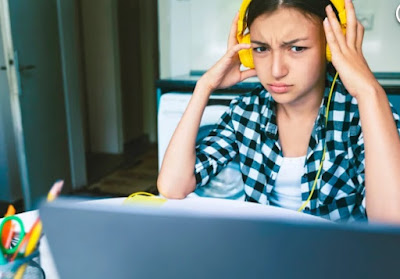 |
| A new lawsuit is speaking up for families struggling to cope with remote learning. |
Families struggle with faulty DOE computers
Remote learning has been a failure for low-income kids relying on faulty laptops and iPads from the city Department of Education — which offered no technical support to the struggling families, according to a lawsuit.
Five parents, who say they’re too poor to pay for high-speed Internet or quality computers for their kids, claim in the court papers their children have been academically left behind when they were forced to use the malfunctioning equipment.
And while the city DOE says all families who have requested devices for remote learning have gotten them, the parents who are suing in Manhattan Supreme Court say poor kids and those who don’t speak English are still not getting “free and reliable Internet service or reliable, working iPads and laptops.”
“Untold numbers of low-income students, and especially low-income students of color, in New York City have been deprived and continue to be deprived, of the sound basic education that is their right,” the group of anonymous parents claim in the litigation.
Some of the children whose parents are fighting in court did not receive any devices for months into remote learning, according to the court papers.
One mom of three, identified only as S.M. in court papers, said when her kids’ devices finally did show up, they couldn’t access the Internet.
Other families in the suit said they were falsely told Internet companies would connect the laptops and iPads online for free — only to be asked to pay monthly fees they couldn’t afford.
A July audit by the City Comptroller’s office found that as of March, the DOE was still reviewing 19,425 student requests for tablets, 16,000 of which dated to 2020, while 3,045 students were mistakenly sent more than one remote learning device.
Even with the city sticking to in-person learning in the 2021-2022 school year, remote classes — such as for some snow days, or Election Day — have now been baked into the academic calendar, the anonymous parents said in court papers.
“Many students continue to struggle with device and Internet issues on this day,” according to the lawsuit.
The city also has no system to repair or replace broken equipment, the parents charge.
The families behind the lawsuit still “have devices that are inadequate,” said Legal Services NYC spokesman Seth Hoy.
“Our clients continue to pay out of pocket for internet service they cannot afford, and their children have not received education services that compensate for their lost education during remote learning days,” he added.
The city has handed out more than 650,000 Internet-enabled devices and more than 27,000 hot spots, and schools have bought more than 400,000 devices, said a DOE spokeswoman who called the city’s distribution of remote learning devices “robust.”
“There are no outstanding device requests at this time,” said spokeswoman Sarah Casasnovas, who said the DOE will review the lawsuit. “Families can continue to request one if they need.”


